The simulation landscape continues to change, as technologies like virtual reality (VR), mixed reality (MR) and other networked devices blend computer-generated scenarios with physical environments for training. Here's an overview of many of these emerging technologies and the impact they have on the evaluation calculus:
VR and MR
VR trainers include head-mounted displays that are used for procedural training, flows and cockpit familiarization. VR trainers are lower-cost options that can often be utilized outside of specialized environments, such as at home.
MR and blended reality (XR) technologies include video pass-through that allows pilots to see and manipulate physical controls while immersed in a truly virtual scene. Providers often position MR simulations as a complement to FFS, not a direct replacement.
XR and reconfigurable trainers are already being utilized for pilot training. For example, the U.S. Army Reconfigurable Virtual Collective Trainer Air program utilizes such technologies.
Networked Simulation Devices
Another emerging trend is connecting devices into a shared synthetic environment using interoperability standards. These include DIS (IEEE 1278) and HLA (IEEE 1516) as well as Live-Virtual Constructive (LVC) training that links live, virtual and computer-generated entities. Networked systems let multiple people work on the same virtual platform from different physical locations.
Evolution of the Modern Flight Simulation Landscape
Several factors are driving the modern flight simulation landscape, notably pilot and instructor shortages, the complexity of modern aircraft that cannot be mastered in real aircraft alone, cost pressures and regulatory realities, among others.
Demand for pilots is high, but there aren't enough human instructors to train them properly. Simulators can provide training for highly repetitive drills, while human coaches focus more on helping pilots in training with their decision-making. Furthermore, novel aerodynamics, like electric vertical takeoff and landing (eVTOL) and powered-lift aircraft, use complex, distributed electric propulsion that cannot be safely or properly mastered in a real aircraft alone.
Finally, regulators like the FAA and EASA are relying more on simulation hours because of fleet constraints and a lack of dual-control physical variants. Operational expenses must also be considered and can be largely offset by using a FFS or other emerging technologies noted in this section.
Evaluating Newer Devices: What to Consider
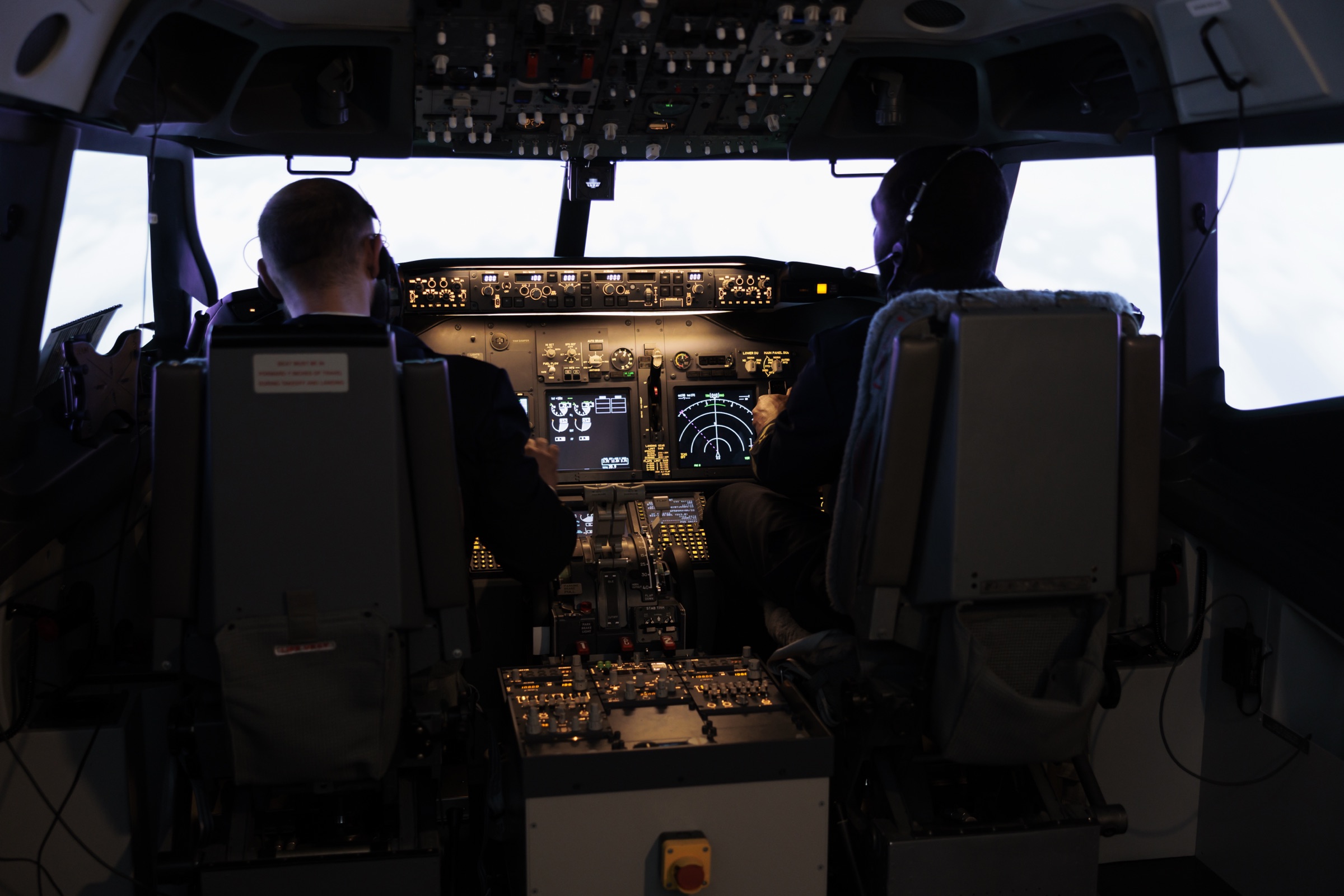
What type of simulation technology is best for your situation? Weigh solutions based on task suitability, fidelity trade-offs, human factors, latency and motion-to-photon delay, and interoperability with existing systems. Here's an overview of each solution to help you make the best decision for your situation:
)
)
)
)
)
)
)
)