How Systems Technology, Inc. Is Defining the Feel of Next-Generation Rotorcraft—and Why Active Inceptor Research Matters 
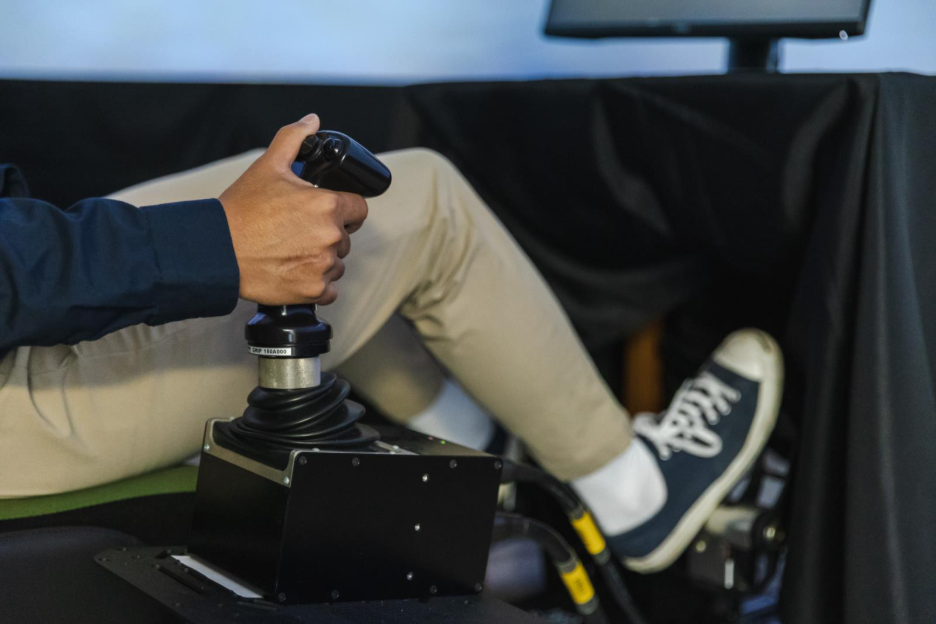
When a test pilot calls a rotorcraft “precise,” “predictable,” and “stable,” they’re describing something engineered—not imagined. That “feel” is the product of control laws, inceptor force-feel shaping, and the underlying pilot-vehicle dynamics.

As rotorcraft progressively adapts fly-by-wire technology, eVTOL developers embrace novel control concepts, and UAS platforms shift toward optionally piloted control philosophies, getting inceptor tuning right has become both more critical and more complex.

For decades, Systems Technology, Inc. (STI) has been the quiet authority behind handling qualities, control-law development, and inceptor behavior. And recent research—including the Vertical Flight Society paper “Handling Qualities Evaluations of Active Inceptors with Varying Force/Feel Characteristics” — reinforces a truth STI has long understood: inceptor tuning fundamentally shapes rotorcraft performance.

Why Inceptor Tuning Is Now a Strategic Requirement 

Active, electronically controlled inceptors give designers unprecedented control over breakout forces, stiffness gradients, damping and inertia, mode-dependent force feedback (hover, cruise, automation), soft stops, detents, and haptic guidance, and envelope-protection cueing. 

The VFS study shows that force-feel variations directly influence pilot workload, precision and aggressiveness, stability margins, PIO susceptibility, and handling qualities ratings from ADS-33 tasks.

The takeaway: inceptor feel must be engineered – not assumed. 

That’s where STI excels. 

How STI Engineers Superior Inceptor Feel 

  1. Mission-Centered Handling Qualities Requirements 

Every mission demands its own feel. SAR hover, autonomous cargo lifts, steep approaches – each requires distinct cues and workload expectations. 

STI translates mission intent into measurable requirements using deep experience in: 

  • ADS-33E 
  • MIL-STD-1797 
  • Equivalent-system bandwidth analysis 
  • Workload prediction 
  • Pilot-vehicle system modeling 
  1. Engineering the Force-Feel Profile 

STI helps OEMs mathematically shape the inceptor’s force-feel signature, including: 

  • Breakout and detent forces 
  • Stiffness-versus-displacement characteristics 
  • Frequency-dependent damping 
  • Soft-top shaping 
  • Haptic cues for automation and envelope limits 

This is STI’s hallmark: integrating biomechanics, human factors, and control-law response into a coherent, intuitive feel. 

Mapping the Inceptor to the Control Laws 

A perfect force-feel profile is only effective if the aircraft’s response matches the pilot’s expectations. 

STI harmonizes inceptor dynamics with control laws spanning: 

  • ACAH 
  • TRC 
  • Rate-command/attitude-hold 
  • Hybrid and autonomous modes 
  • eVTOL-specific envelopes 

This closed-loop mapping is where programs succeed—or encounter PIOs and MTE failures. 

Simulation-Based Tuning 

Long before first flight, STI uses high-fidelity simulation to analyze: 

  • Pilot/vehicle dynamics 
  • Sensitivity to natural frequency and damping 
  • Predicted HQ ratings across MTEs 
  • Hover and low-speed workload 
  • Control-law bandwidth and phase interaction 

Flight-Test and Certification Support 

In flight test, STI helps OEMs: 

  • Build efficient test matrixes 
  • Tune based on qualitative pilot feedback + quantitative metrics 
  • Validate hover, low-speed, and high-speed handling qualities 
  • Document compliance 
  • Address transitions, automation modes, and degraded conditions 

This is where decades of handling-qualities heritage pay off. 

Why OEMs Turn to STI 

  1. 60+ years shaping the handling-qualities discipline 
  1. Deep, proven expertise with active inceptors 
  1. Tailored for modern eVTOL, rotorcraft, and pilot-optional UAS missions 

When feel matters—and it always does—STI is the partner that ensures it’s engineered, measurable, and repeatable.

Looking Ahead: Adaptive Feel and Human-Automation Teaming

Active inceptors are quickly evolving into intelligent, cooperative interfaces. They are becoming: 

  • Mode-adaptive 
  • Automation-aware 
  • Haptic-communicative 
  • Dynamically reconfigurable 

They’re no longer just sticks—they’re part of the aircraft’s cognitive system, managing workload, enforcing boundaries, cueing transitions, and enabling human-automation teamwork. 

STI is already pushing this frontier, leveraging decades of human-factors and handling-qualities research to help OEMs get the next generation right.

Closing Thoughts

The VFS paper “Handling Qualities Evaluations of Active Inceptors with Varying Force/Feel Characteristics” underscores what STI has long addressed: variations in force-feel profoundly affect handling qualities. Creating the right feel is a quantitative challenge grounded in biomechanics, pilot-vehicle dynamics, software control laws, and rigorous flight-test data.

Systems Technology, Inc. Brings all these disciplines together to help OEMs build rotorcraft, eVTOL, and UAS platforms that don’t just meet performance requirements—they feel exactly the way pilots intend.

About Systems Technology Inc.: Systems Technology Inc. (STI) is a technology company at the forefront of innovation, specializing in aviation and simulation solutions. With a mission to advance safety and efficiency in aviation, STI develops cutting-edge technologies to meet the evolving needs of the aerospace industry.

Advancing Fly-by-Wire and Ground Handling Performance 

At Systems Technology, Inc. (STI), we help engineers and pilots understand and improve how aircraft behave—both in the air and on the ground. Our work in fly-by-wire control and ground handling combines decades of flight dynamics expertise with proven modeling and analysis capabilities. 

Fly-by-Wire: Precision in Flight Control 

STI’s fly-by-wire experience began with an independent assessment of the Space Shuttle’s pitch-axis control law—the first operational fly-by-wire system. Since then, we’ve supported the design and analysis of control systems for military and commercial transports, fighters, business jets, and rotorcraft. 

Our methods integrate classical control insights with modern optimal and adaptive design techniques. We’ve worked with the FAA, NASA, and the Department of Defense to develop design requirements and handling qualities criteria, with particular focus on understanding and mitigating Pilot-Induced Oscillations caused by actuator rate limiting. 

Ground Handling: Stability on the Runway 

STI also applies flight control principles to ground operations, helping manufacturers and operators better predict aircraft behavior during landing rollout and taxi. Beginning in the late 1990s, we developed modeling approaches that place tire characteristics—rather than aerodynamic effects—at the center of ground handling analysis. 

Our capabilities include model development, analysis, computer and piloted simulation, and flight test support. This work has supported programs such as the U.S. Navy’s jet trainer and recent unmanned aerial vehicle efforts. 

Complete Control Across Every Phase 

From fly-by-wire design to ground handling evaluation, STI provides a full view of aircraft dynamics. Our experiences help reduce risk, improve controllability, and enhance safety from takeoff through rollout. 

Contact us to learn how STI can support your next flight control or ground handling program: https://www.systemstech.com/contact/ 

About Systems Technology Inc.: Systems Technology Inc. (STI) is a technology company at the forefront of innovation, specializing in aviation and simulation solutions. With a mission to advance safety and efficiency in aviation, STI develops cutting-edge technologies to meet the evolving needs of the aerospace industry.
Advancing Aircraft Handling Qualities with STI Expertise

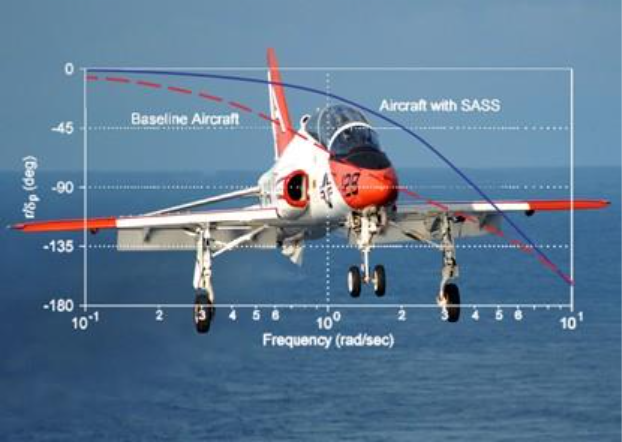
At Systems Technology, Inc. (STI), handling qualities (HQ) are part of our foundation. For decades, we’ve helped aerospace teams understand and improve how pilots interact with their aircraft—across fighters, rotorcraft, transports, business jets, and emerging systems like UAS and hypersonic vehicles.

A Proven Legacy in Handling Qualities 

Since our founding, STI has played a key role in shaping the handling qualities (HQ) standards that guide the aerospace industry today. Our engineers contributed to the development of fixed-wing, rotary-wing, and V/STOL specifications and the first mission-oriented design standard—ADS-33 for military rotorcraft. We also developed widely used data repositories for aircraft and helicopters that remain valuable resources for research and system development. 

Independent Assessments for Every Platform 

STI provides independent handling qualities evaluations for a broad spectrum of vehicles, including the X-15, F-16, V-22, C-17, and Space Shuttle. Our assessments support both simulation and flight test environments, giving program managers and engineers data-driven insights into controllability, pilot workload, and flight dynamics—critical for certification and development. 

Enhancing Pilot-Vehicle Interaction 

Since the 1960s, STI has studied how pilots interact with flight controls and systems. Our research into inceptor characteristics informed today’s human operator models and control system design. Building on that heritage, we’ve advanced active pilot cueing solutions such as Smart-Cue, Smart-Gain, and SAFE-Cue—adaptive feedback and control concepts designed to prevent pilot-induced oscillations and improve stability during challenging conditions. 

Modern Methods for Pilot Workload Evaluation 

Our latest work applies wavelet transform analysis and psychophysiological metrics to better understand pilot input and workload in real time. These methods enhance simulation and flight test evaluations, providing a clear view of how pilots respond to dynamic or high-stress flight conditions. 

Comprehensive Support from Design to Certification 

STI supports all phases of handling qualities analysis—from requirements definition and design evaluations to certification and flight test. Our tools and consulting services help engineers make confident, data-backed decisions that improve performance, safety, and pilot effectiveness. 

Partner with STI for trusted handling qualities solutions. Learn how our experience and tools can support your next program: https://www.systemstech.com/contact/ 

About Systems Technology Inc.: Systems Technology Inc. (STI) is a technology company at the forefront of innovation, specializing in aviation and simulation solutions. With a mission to advance safety and efficiency in aviation, STI develops cutting-edge technologies to meet the evolving needs of the aerospace industry.
Marty Shubert Named SETP Fellow for Contributions to Experimental Flight Testing and Aviation Innovation

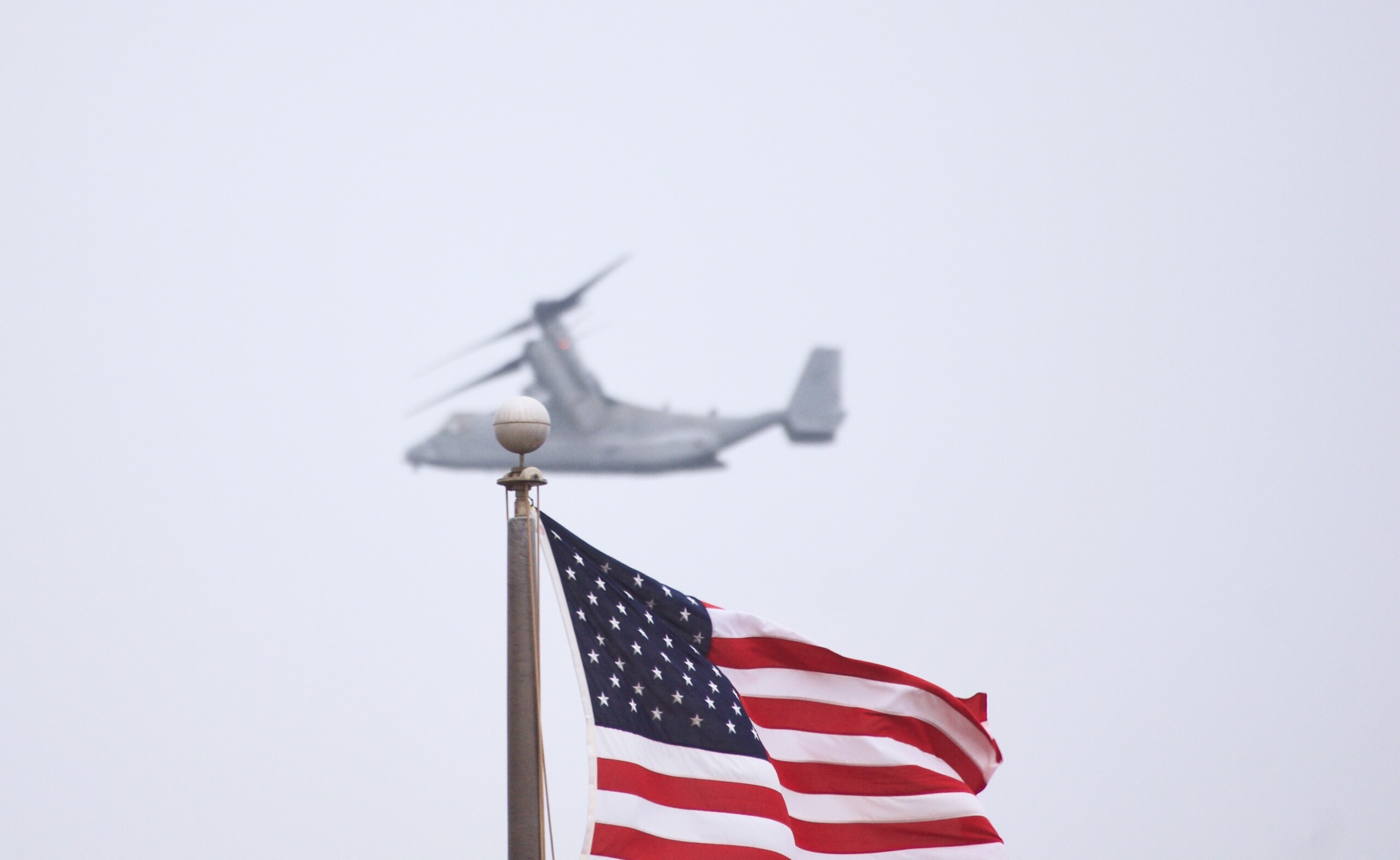
Marty Shubert, a long-time STI collaborator and visionary flight test professional, was recently recognized as a Fellow of the Society of Experimental Test Pilots (SETP), one of the highest honors in the global flight test community. The recognition was presented at the 69th Annual SETP Symposium, where Marty also received the Javier Arango Award for Best Historical Paper, coauthored with Dr. Mike Jones of STI and Dave Sizoo of the FAA. The paper highlighted Marty’s extensive historical knowledge of the V-22 tiltrotor program, reflecting his lasting contributions to aviation history. 

A Legacy in Experimental Flight Testing

With nearly 40 years of experience flying and testing military aircraft, Marty’s contributions to aviation span from legacy rotorcraft to advanced powered-lift aircraft. He began his career flying with the U.S. Army in the early 1980s, transitioning into experimental flight test in 1990. He played a key role in evaluating and refining vehicles like the CH-47D, the MH-47E Chinook, and later the V-22 tiltrotor (Osprey) – where his work on terrain-following radar and flight tests enhanced critical mission capabilities.

Driving Innovation in eVTOL and FAA Certification 

His career is marked by a relentless pursuit of safety, performance, and innovation. Since starting his collaboration with STI, Marty has led simulations and flight testing in diverse areas, such as biometric pilot studies, virtual Handling Qualities (HQ) course evaluations, and the development of eVTOL HQ test maneuvers. He has also participated in NASA and FAA research focused on new state-based flight control systems and inceptor designs—work that supports emerging FAA certification pathways and national research initiatives. His work consistently bridges the gap between simulation and real-world behavior – especially important in today’s fast-evolving aviation landscape.

“Much as you can model and simulate it, we keep getting surprised. That’s why test pilots are still essential.” — Marty Shubert, SETP Fellow

Working together with STI, Marty has been key in shaping and executing research flight programs that push the envelope of what’s possible in rotorcraft and powered-lift design. His deep technical insight and collaborative mind have made him a go-to leader for test programs involving new configurations, complex aeromechanics, and human-machine interaction.

Mentorship and the Future of Test Piloting 

Looking ahead, Marty remains committed to mentoring the next generation of test pilots. With the U.S. Army’s development of the MV-75 tiltrotor aircraft, and the evolving civil powered-lift designs, he looks forward to helping train flight test teams on envelope expansion and tiltrotor flight dynamics, areas where few pilots have hands-on experience. 

Marty’s election to the SETP Fellows Class of 2025 is a testament not only to his technical excellence but to his enduring impact on the global aviation community. We’re honored to work alongside him – and excited to see what’s next.

Congratulations, Marty – from all of us at STI!

About SETP: The Society of Experimental Test Pilots (SETP) is an international organization that promotes safety, communication, and education in aerospace design and flight testing. By fostering collaboration and sharing expertise, SETP advances flight test excellence and enhances safety across the aviation community. At the 69th Annual Symposium, Marty Shubert was honored as a Fellow of the SETP Class of 2025, alongside eleven other distinguished pilots.

About Systems Technology Inc.: Systems Technology Inc. (STI) is a technology company at the forefront of innovation, specializing in aviation and simulation solutions. With a mission to advance safety and efficiency in aviation, STI develops cutting-edge technologies to meet the evolving needs of the aerospace industry.