

Counter-UAS (C-UAS): How Drone Defense Systems Work

Dr. Mike Jones

10/27/2026

Aerospace
Small drones are becoming an increasing threat to military bases, airports and other critical sites, and defending against them is one of the biggest priorities in aerospace and defense today. Modern weaponized drones can quickly and accurately target soldiers in the field or civilians in populated areas. They can also easily disrupt airports and infrastructure. This all underscores the importance of detecting, tracking and neutralizing unauthorized or hostile drones, a key role of drone defense systems, or counter-UAS (C-UAS).
In this article, we'll take a closer look at how counter-UAS systems work and the flight-control challenges they often face. Read on to learn more or contact STI today.
What is Counter-UAS (C-UAS)?
Counter-UAS or C-UAS stands for "counter-unmanned aircraft systems." These may also be referred to as "counter-drone systems."
More specifically, C-UAS is a suite of technologies, procedures and frameworks used to detect, track, identify, and, when necessary, mitigate unauthorized or hostile drones. C-UAS is commonly used by armed forces, airports, law enforcement and governments to protect everything from people to critical infrastructure and national security interests.
C-UAS is not to be confused with UAS. UAS stands for "unmanned aerial systems" and refers to the drone and the ground control setup. Think of UAS as the drone and C-UAS as the system that counters it.
The Detect, Track, Defeat Framework
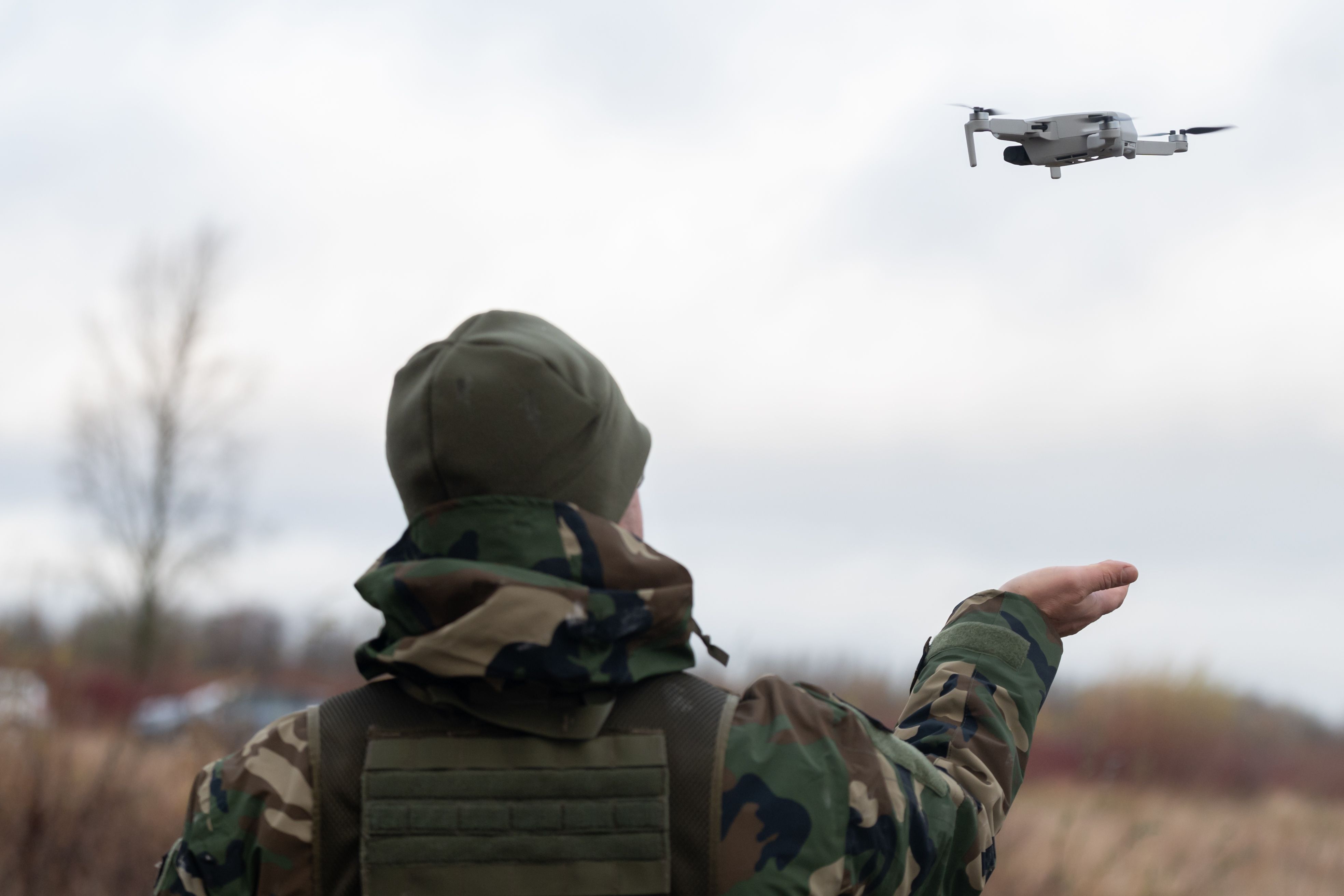
Here's an overview of the complete C-UAS framework:
Detection
Detection specifically involves identifying the physical presence or the electromagnetic signature of a drone or drone swarm during drone incidents. C-UAS spots drones using a network of sensors, including radar, RF analyzers, acoustic sensors and/or cameras.
Tracking
Systems monitor the real-time flight path of unauthorized drones, including their speed and trajectory, as they take action. C-UAS continuously monitors trajectory to predict movement accurately and classify the threat level. Tracking data can help distinguish hostile drones from decoys and inform mitigation. Identification is another key aspect of C-UAS that tracking can help assist. Systems classify the drone model and can potentially locate the operator's position.
Mitigation
Finally, there's neutralization of the threat. When legally authorized, systems take appropriate action against the drone based on the specific operational environment. Common mitigation methods include using RF jammers or GPS spoofing to disrupt communication, hacking or taking control of the drone, physically capturing or destroying the drone, or deploying lasers or microwaves to disable the drone's electronics.
Autonomy and Resilient Navigation
In some cases, C-UAS must rely on advanced and innovative technologies and inertial navigation to maintain tracking and flight control when satellite signals are jammed or when GPS signals become interrupted by electronic warfare. In these cases, the system must operate without a reliable outside signal, which can be difficult. Such situations underscore the importance of high-quality C-UAS engineering.
The Hard Part: Contested, GPS-denied Environments
C-UAS are designed to work effectively and efficiently in most environments. However, these systems face their biggest challenge in contested, GPS-denied environments. These challenges aren't specific to C-UAS; they also affect the drones they monitor.
When communications and satellite signals are jammed, systems must rely on their engineering to succeed. This is where autonomy and resilient navigation become important. Good C-UAS must sense, act and fly without a reliable outside signal, making onboard intelligence and sensor fusion all the more important to the success of its mission in hostile environments.
Without GPS, C-UAS can't see where a drone is. This means it must detect its surroundings and the drone's location using its internal hardware. It can track acceleration and angular velocity using inertial measurement units (IMUs), cameras, and radar and sonar. From there, C-UAS must convert the location data into action. This is often done via sensor fusion, simultaneous localization and mapping (SLAM) and autonomous edge computing. Finally, execution translates the plan into action.
Where Guidance, Navigation and Control Fit
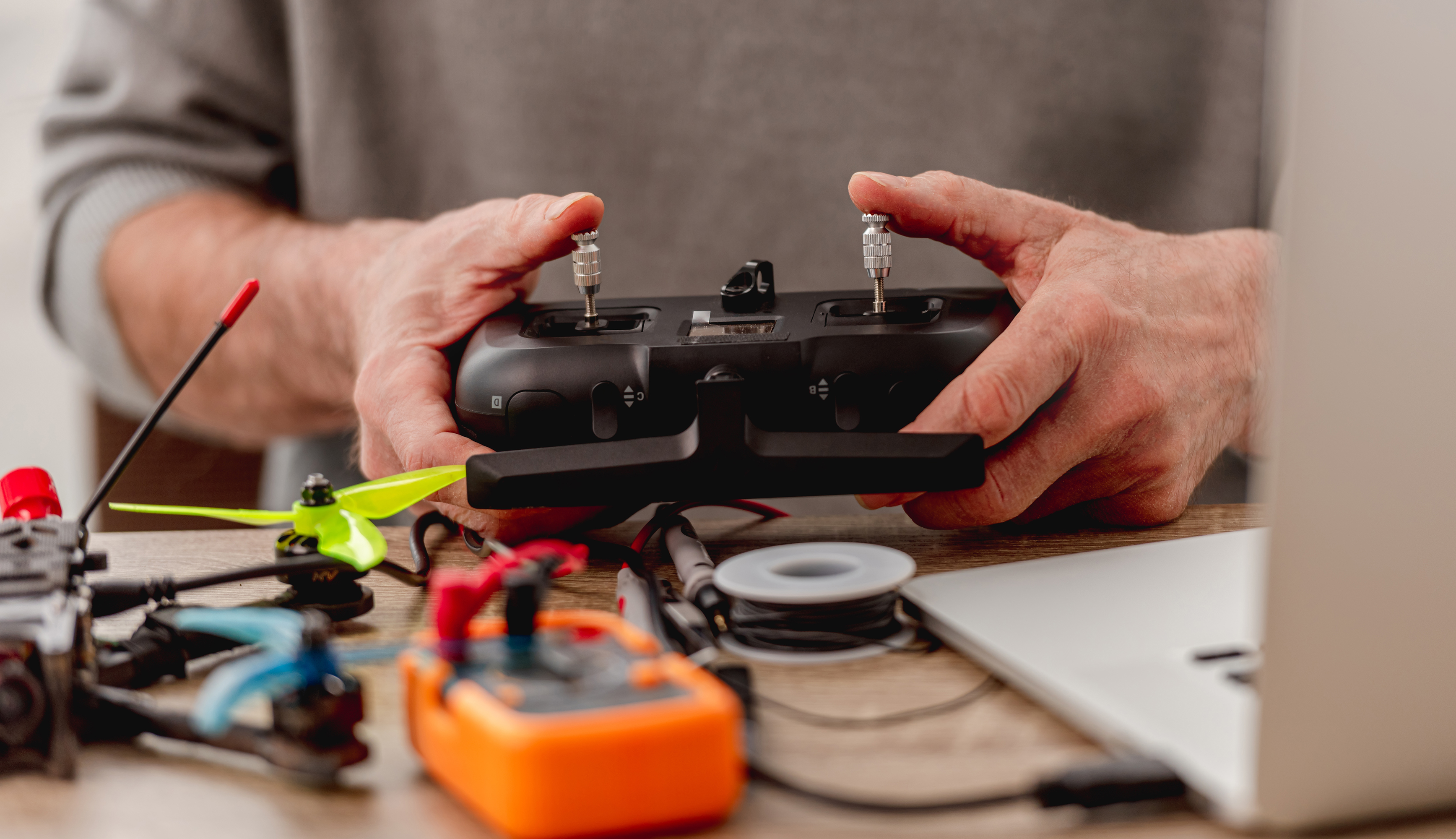
An interceptor or C-UAS is only as good as its guidance, navigation and control (GNC) and handling qualities. It must stay stable as it travels through the sky to track its target, often completing its mission under intense conditions and stress. Without all three GNC aspects working together in harmony, the chances of success are low. Bottom line: An interceptor or autonomous unmanned system is only as good as its GNC qualities.
So how does a C-UAS stay stable, track a target and complete the mission? It all starts with navigation, or tracking the drone's current position, velocity and orientation using onboard sensors, IMUs and star trackers. From there, the system calculates the optimal path from its current position to the target, adapting in real time to any maneuvers. The system will then work to translate commands into physical action, manipulating fins, thrust and reaction control thrusters.
Working under stress is another necessity of C-UAS, as systems are often pushed to their limits when executing missions. Intense disruptions include extreme aerodynamic changes and environmental disturbances (i.e., hypersonic airflow, atmospheric turbulence, wind shear, etc.) and system latency, when the delay between sensing a threat and countering it can be the difference between success and failure.
This shows how important C-UAS engineering is. What's more, C-UAS engineering is more than just a standalone offering; it is an active solution pipeline. Systems with active, engaged engineering teams are most likely to succeed in drone defense.
How STI Supports Unmanned and Autonomous Flight Programs
Interceptors and autonomous unmanned systems are only as good as their GNC and control capabilities. How they stay stable, track a target, and neutralize the threat, often under stress, is what separates success from failure. As a premier engineering partner for GNC, flight control, handling qualities, and simulation work behind manned, unmanned and autonomous aircraft, STI is here to help take your systems to the next level.
At STI, we specialize in GNC development, deployable flight controllers, flight-management hardware and unmanned systems software tools. Contact us today to learn more about our offerings.
Frequently Asked Questions
A: UAVs are unmanned aerial vehicles, or drones. A counter-UAV, or C-UAS, is a system that detects and defeats drones. Also commonly referred to as anti-drone technology, C-UAS consists of the methods, devices and procedures that are used to detect, track, identify and stop unauthorized or hostile drones.
A: There is no single right way to counter unauthorized or hostile drones. Countering them largely depends on the specific threat, the environment and any rules of engagement. Often, countering consists of a multi-layered defense strategy combining detection, tracking and mitigation technologies based on the specific environment.
A: C-UAS stands for "counter-unmanned aircraft systems," also known as anti-drone technology. It's important not to confuse C-UAS with UAS. Think of UAS as the drone and C-UAS as the system that counters it.
A: Counter-UAS systems struggle in GPS-denied environments because they must navigate and stay stable without a reliable signal. This is where autonomy and resilient navigation become important, as systems must sense, act and fly accordingly.
Conclusion and Next Step
As unmanned and counter-UAS systems become more autonomous, the engineering behind the guidance, navigation, control and handling can become a competitive advantage. That's STI's specialty, and we're ready to help your team take these technologies to new heights.
Contact us today to schedule an appointment to speak with STI's aerospace engineers on GNC, flight control and handling qualities.


